
Steel Turned Parts Ensure Consistent Results with Every Manufacturing Cycle
Steel turned parts play a crucial role in modern manufacturing, offering unparalleled precision, durability, and consistency that are vital for industries demanding high-quality components. These parts, produced through the turning process on a lathe, involve shaping steel workpieces by rotating them against cutting tools to achieve the desired dimensions and surface finish. This method is especially favored in sectors like automotive, aerospace, machinery, and medical devices, where exact specifications and repeatability are non-negotiable. One of the primary advantages of steel turned parts is their ability to ensure consistent results with every manufacturing cycle, a feature that significantly enhances production efficiency and product reliability. The consistency of steel turned parts begins with the inherent properties of steel itself. Steel, known for its strength, toughness, and resistance to wear and corrosion, provides an ideal material base that maintains its mechanical integrity under various operating conditions.
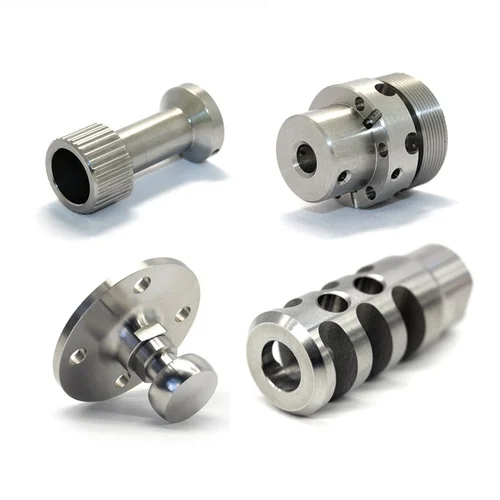
When steel is used in turning operations, it allows for precise machining without compromising its structural qualities. This stability in the material ensures that each part manufactured meets the required tolerances and performance standards, reducing the likelihood of defects or variations that could affect the final product. Moreover, advancements in CNC Computer Numerical Control turning technology have revolutionized the production of steel turned parts, enabling manufacturers to achieve even higher levels of accuracy and repeatability. CNC machines Uneed operate with programmed instructions that control the movement and operation of the cutting tools, eliminating human error and ensuring that every cycle produces parts that are virtually identical. This automation allows for tight control over dimensions, surface finishes, and complex geometries, which are critical for applications where even the smallest deviation can lead to product failure or inefficiency. The ability to reproduce parts consistently also contributes to cost savings and operational efficiency. When manufacturers can rely on steel turned parts to meet exact specifications repeatedly, there is less need for rework, inspection, or quality control interventions, which streamlines the production process.
This reliability also minimizes downtime caused by part failures or replacements, allowing industries to maintain smooth and continuous operations. Additionally, consistent parts facilitate easier assembly and integration into larger systems, enhancing overall product quality and customer satisfaction. In addition to precision and durability, steel turned parts offer flexibility in design and customization. Different steel grades and heat treatments can be selected to tailor the parts to specific performance requirements, such as enhanced hardness, improved corrosion resistance, or better fatigue strength. This versatility allows manufacturers to optimize parts for a wide range of applications without sacrificing consistency or quality. Steel is a recyclable material, and advancements in manufacturing techniques have reduced waste and energy consumption during the turning process. This sustainability aspect aligns with growing industry trends toward eco-friendly production methods; making steel turned parts not only a practical choice for manufacturers but also a responsible one for the planet. By providing dependable components that reduce costs and improve efficiency, steel turned parts continue to be indispensable in modern manufacturing, supporting the production of high-quality products across diverse sectors.
